VSWR
Per NPTR1 (NPTR5-DP-2FT) datasheet, VSWR HPOL stays < 1.5 across 4.9–6.4 GHz (beam 6.0°/6.2°, F/B 38 dB).

NPTR1 marine-grade antenna (NPTR5-DP-2FT), 30 dBi, 2 ft
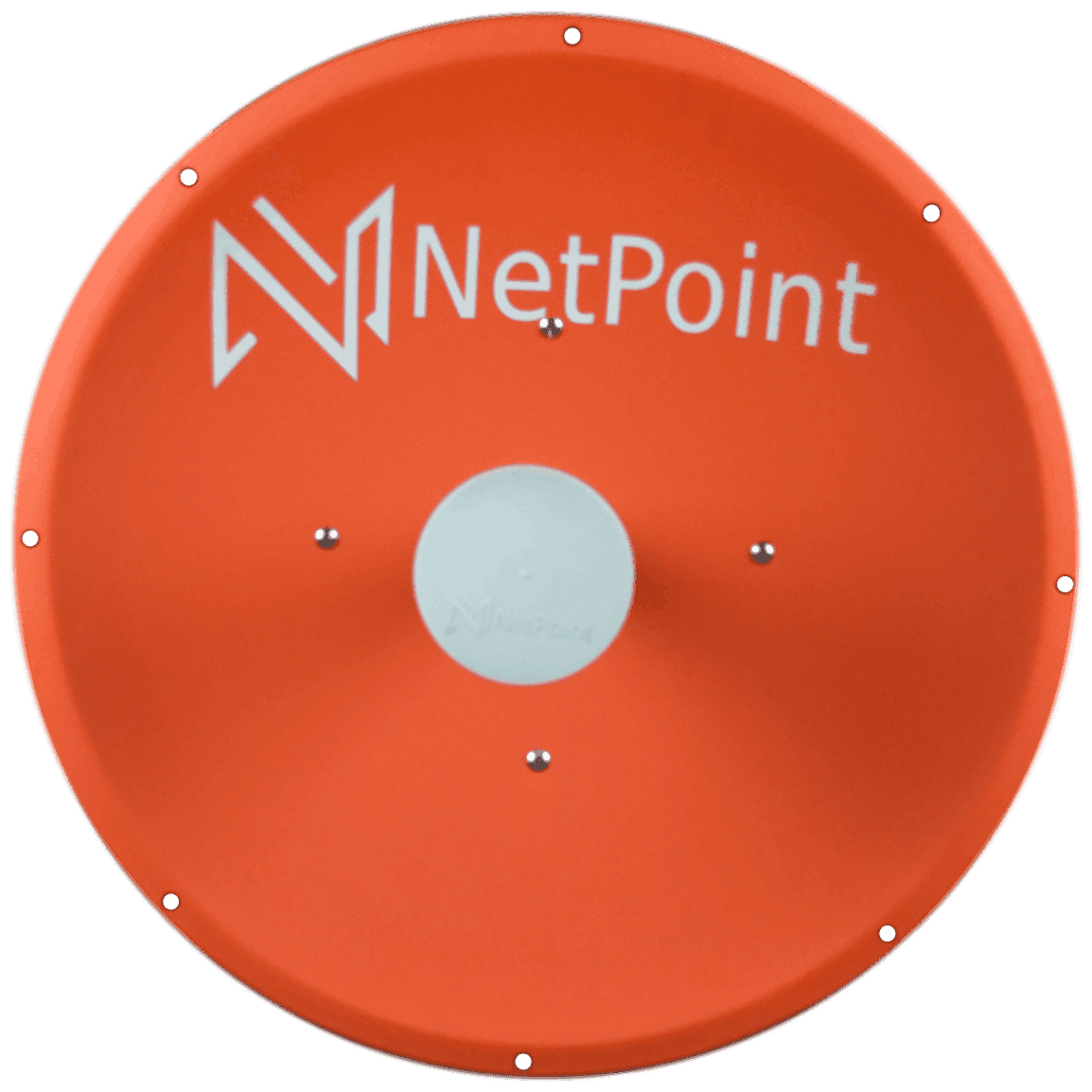
NPTR5-DP-2FT
1 / 5
Description. The NetPoint NPTR1 marine-grade parabolic antenna (NPTR5-DP-2FT) offers dual polarization, N-female connector, and excellent VSWR across 4.9–6.4 GHz. Hot-dip galvanized materials and an integrated radome for PtP backhaul in maritime environments — PtP up to 30 km.
NetPoint warranty for manufacturing defects
Request this product
Informational catalog — no online purchase. Contact sales or an authorized distributor.

4.9 – 6.4 GHz

28–30 dBi

Marine grade

Dual Slant

2 ft
| Model | NPTR1 |
|---|---|
| SKU | NPTR5-DP-2FT |
| Antenna type | Directional parabolic reflector |
| Frequency | 4.9 - 6.4 GHz |
| Connector type | N-female / Dual N-Female |
| Gain (dBi) | Low 28 - Mid 29 - High 30 |
| VSWR HPOL | < 1.5 |
| Beamwidth VPOL | 6.0° |
| Beamwidth HPOL | 6.2° |
| Return loss | 11 |
| ISO | XDP | 30 |
| F/B ratio (dB) | 38 |
| Polarization | Dual slant 45° or 90° |
| Size | ø 60 cm / 2 ft |
|---|---|
| Azimuth adjustment | +/- 60 degrees |
| Elevation adjustment | +/- 15 degrees |
| Mast diameter min/max | 1 in – 2.750 in |
| Operating temperature | -45 to +60 C° |
| Wind load | 200 km/h | 125 mph |
| Pigtail length | 2 ft - 600 mm |
| Includes | Radome · N–RPSMA pigtails · Mount |
Cambium Networks · Mimosa Networks · Ubiquiti · Radwin · Telrad · LigoWave · Astra Wireless · Zyxel · Proxim Wireless









Per NPTR1 (NPTR5-DP-2FT) datasheet, VSWR HPOL stays < 1.5 across 4.9–6.4 GHz (beam 6.0°/6.2°, F/B 38 dB).
Gain Low 28 / Mid 29 / High 30 dBi across 4.9–6.4 GHz.
Mechanics set a great antenna apart — designed to make tower work easier for installers.
NPTR1 antennas operate across 4.9–6.4 GHz (licensed and unlicensed), covering 5 and 6 GHz with one reflector.
Per the NPTR1 datasheet, gain is Low 28 / Mid 29 / High 30 dBi.
They use low-loss N-female connectors and ship with N–SMA jumpers compatible with Mimosa, Cambium, and Ubiquiti radios.
Per the NPTR5 product page, reference PtP range is 30 km (18 mi) and CPE 15 km (10 mi).
Per datasheet, VSWR HPOL stays < 1.5.
NPTR1 antennas use dual-slant ±45° polarization, ideal for MIMO 2×2 efficiency in backhaul environments.
Yes. They use treated aluminum with anti-corrosion coating and a fiberglass radome resistant to UV and rain.
Yes. They work with radios in the upper 6 GHz band, including Wi‑Fi 6E backhaul, LTE-LAA, and custom solutions.
They can work on short hops, but a minimum of about 3 km is recommended to avoid overpower and protect the Fresnel zone.
Mount NPTR1 antennas on 2-inch steel masts or towers at least 6 m high, with precise aiming and firm anchoring.
You can add NetPoint RF shields, wind-load radomes where needed, and the SANP stabilizer arm for more professional installs.
NPTR is designed specifically for aggressive environments (coastal climates, high salinity, and extreme humidity). Unlike standard antennas, NPTR hardware uses hot-dip galvanizing and stainless fasteners to avoid premature corrosion.
Yes. Even though the antenna is rugged, sealing connections with self-amalgamating (vulcanizing) tape is essential to keep moisture out of the jumpers and protect the link.
Estimated service life in extreme environments is 12 years, subject to a technical assessment of the installation site.
Mining, energy / oil & gas, and marine applications — plus ports, wind/solar parks, coastal surveillance, rural connectivity, and beach resorts.

Made in Mexico
Designed and manufactured in Mexico with 100% domestic materials by NetPoint R&D. Proudly Mexican patent.