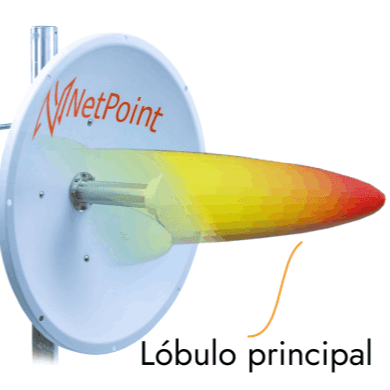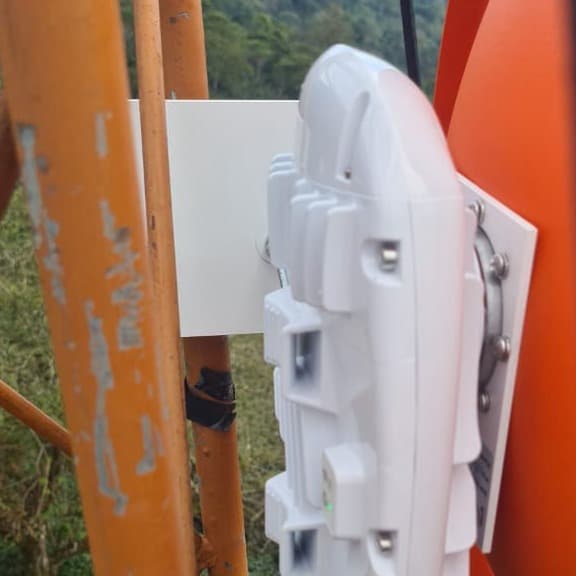
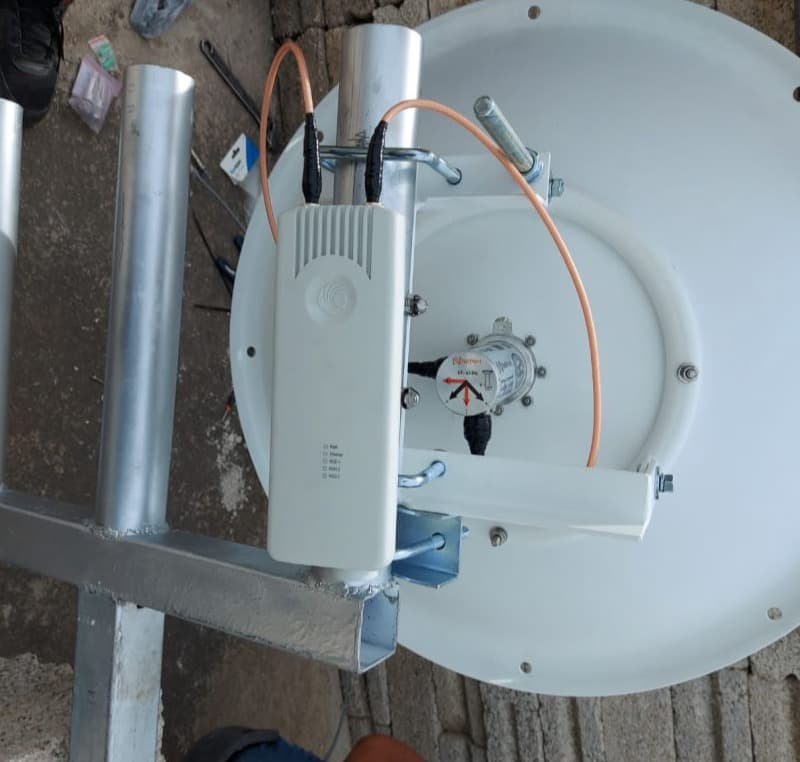
When deploying a Point to Multipoint (PMP) network, one of the details that can make a real difference is how the customer antenna is installed.
For NetPoint CPE installations, we recommend using a 45° slant orientation when the NetPoint antenna is being used as the customer side antenna in a PMP network, provided that the radio and antenna polarization are designed to work together.
Why 45°?
The main reason is interference management.
In a wireless network, the same frequency can be used by many radios at the same time. The challenge is not only making sure the customer can see the access point, but also making sure the antenna receives as little unwanted signal as possible from other directions or networks.
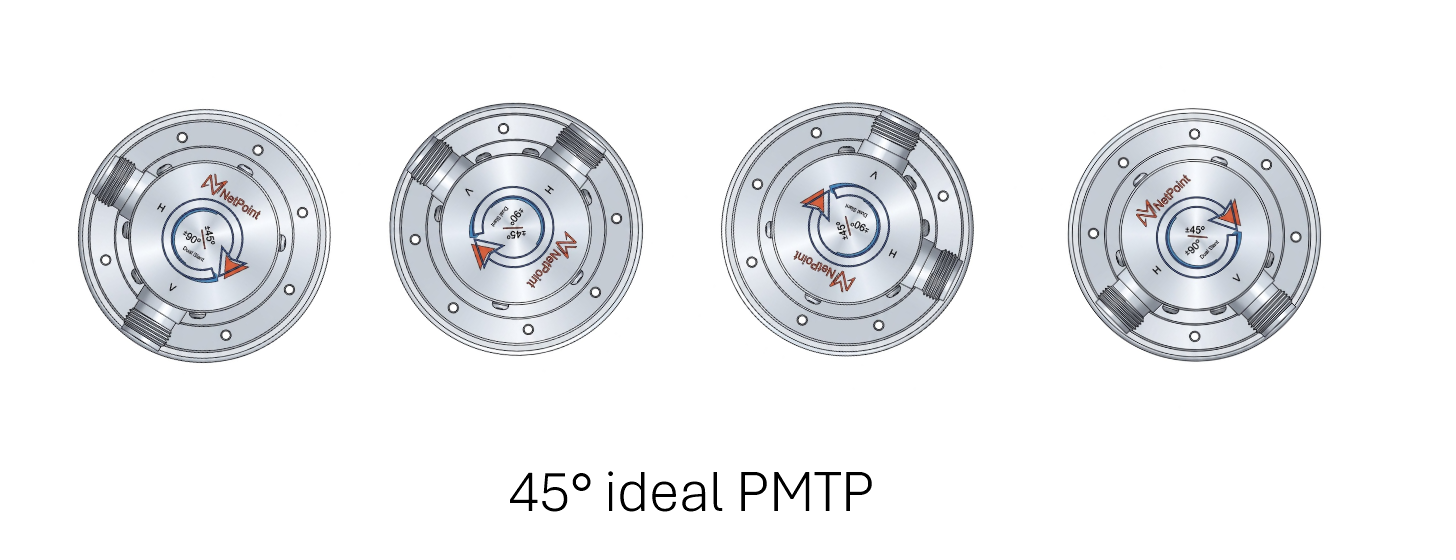
Most traditional wireless equipment uses vertical or horizontal polarization. By installing the NetPoint CPE at a 45° slant, the antenna's polarization is positioned diagonally rather than directly vertical or horizontal.
This can help reduce the amount of unwanted interference that the CPE receives from signals using conventional vertical or horizontal polarization.
Better isolation can mean a cleaner link
Think of polarization as a filter.
If the wanted signal and an interfering signal have different polarizations, the antenna can naturally reject part of that unwanted signal.
A 45° slant does not magically increase the antenna's gain. Instead, its purpose is to improve the overall RF environment in which the CPE operates.
This becomes especially valuable in PMP deployments where one sector may be serving many customers and where several networks may be operating on nearby channels.
Why is this important for PMP?
A Point to Point link has only two endpoints.
A PMP network is different. One sector can communicate with many CPEs simultaneously, and the RF environment can become much more complicated.
For example, a PMP sector may serve multiple customers, and every installation may have different buildings, towers, trees, neighboring networks, and sources of interference around it.
Using a consistent 45° slant orientation for the NetPoint CPEs can help create a more controlled RF environment and provide additional polarization discrimination against unwanted signals.
What about the Force 4600C?
When a NetPoint antenna is paired with a radio such as the Cambium Networks Force 4600C, the antenna and radio should be treated as one RF system.
The Force 4600C uses two RF chains for 2×2 MIMO. With a properly designed dual polarized NetPoint antenna, the two polarization paths work together to maintain the MIMO connection.
The goal is therefore not simply to rotate the antenna 45° because 45° is better.
The antenna polarization, the radio's RF ports, and the polarization used by the PMP sector must all be correctly matched.
The key point
A 45° installation is primarily a network design decision, not an installation trick.
We use it when the NetPoint antenna is selected as the CPE for a PMP network because it can provide an additional level of polarization isolation and interference control while maintaining the performance required by the wireless link.
For this reason, the recommended installation is:
PMP Sector → NetPoint CPE → 45° Slant → Correct Polarization Alignment → Force 4600C
The exact orientation should always be confirmed based on the antenna's polarization design and the equipment being used at the access point.
In simple terms
The 45° slant is not intended to give the antenna more gain. It is intended to help the CPE listen to the signal it needs while reducing the impact of unwanted signals around it.
For dense PMP networks, that difference can become very important.
If you have any questions, feel free to email me at david.alvarez@antenas.com.mx or reach me via iMessage at +523319706753.
David Alvarez