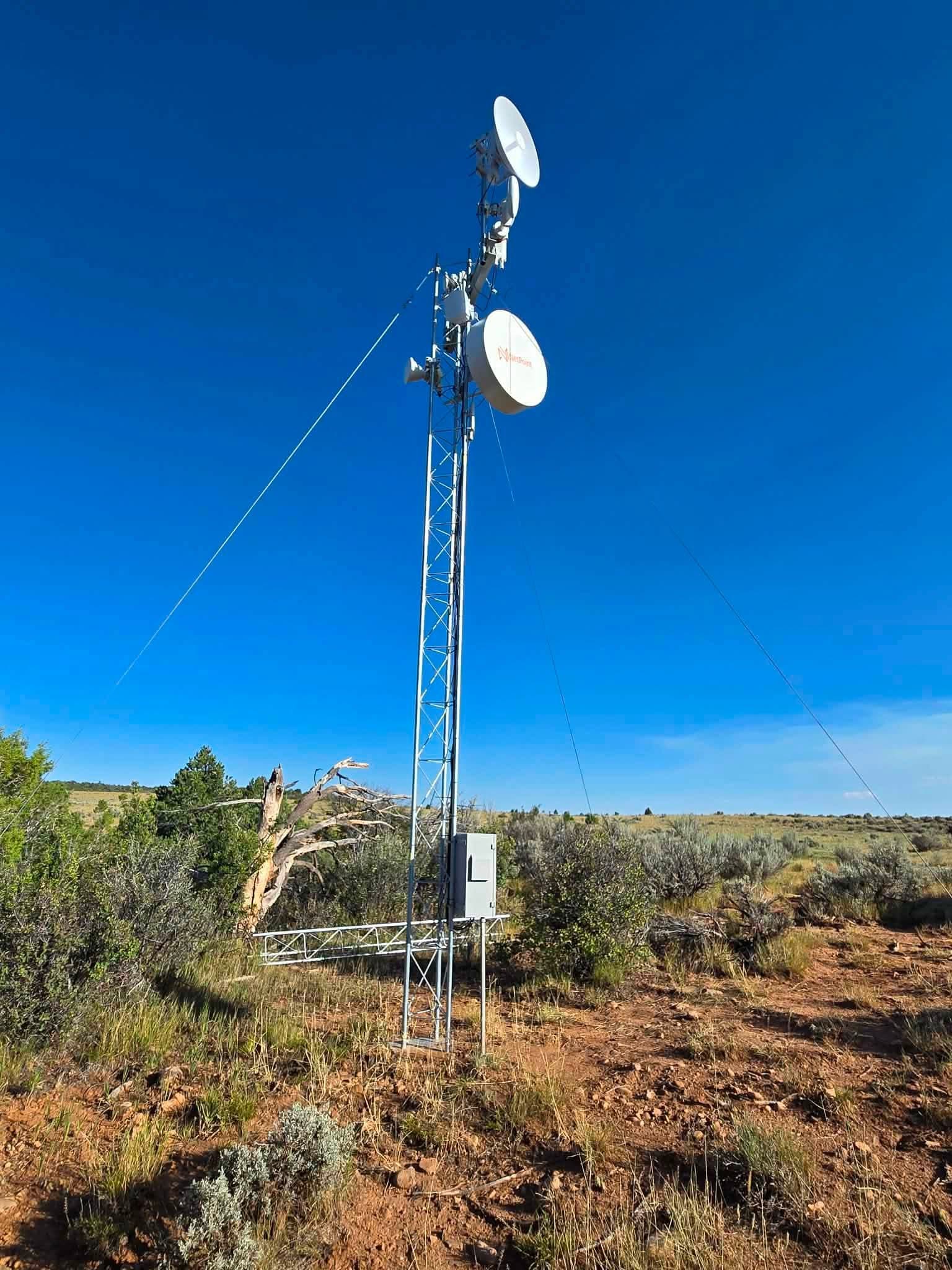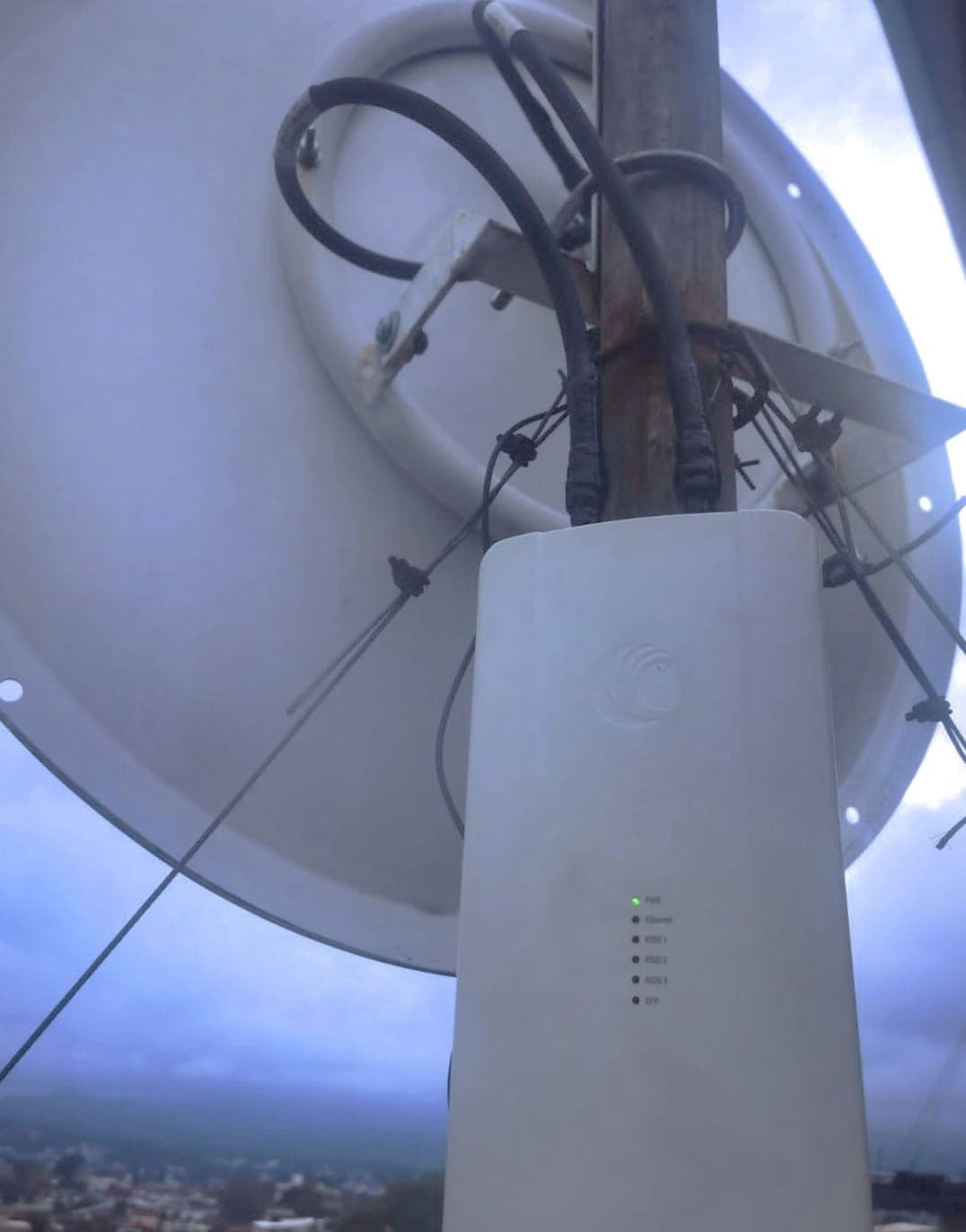
A ultra-long-distance point-to-point (PTP) link was successfully deployed connecting EMISOR-COSTA1 and RECEPTOR-COSTA1 in Mexico across a distance of 112.04 km (69.6 miles). To maintain operational stability, low latency, and high modulation orders over this distance, the setup paired high-performance NetPoint NPX64 parabolic dish antennas with Cambium Networks ePMP Force 4600C radios operating in the uncrowded 6 GHz spectrum (Wi-Fi 6E / 802.11ax).
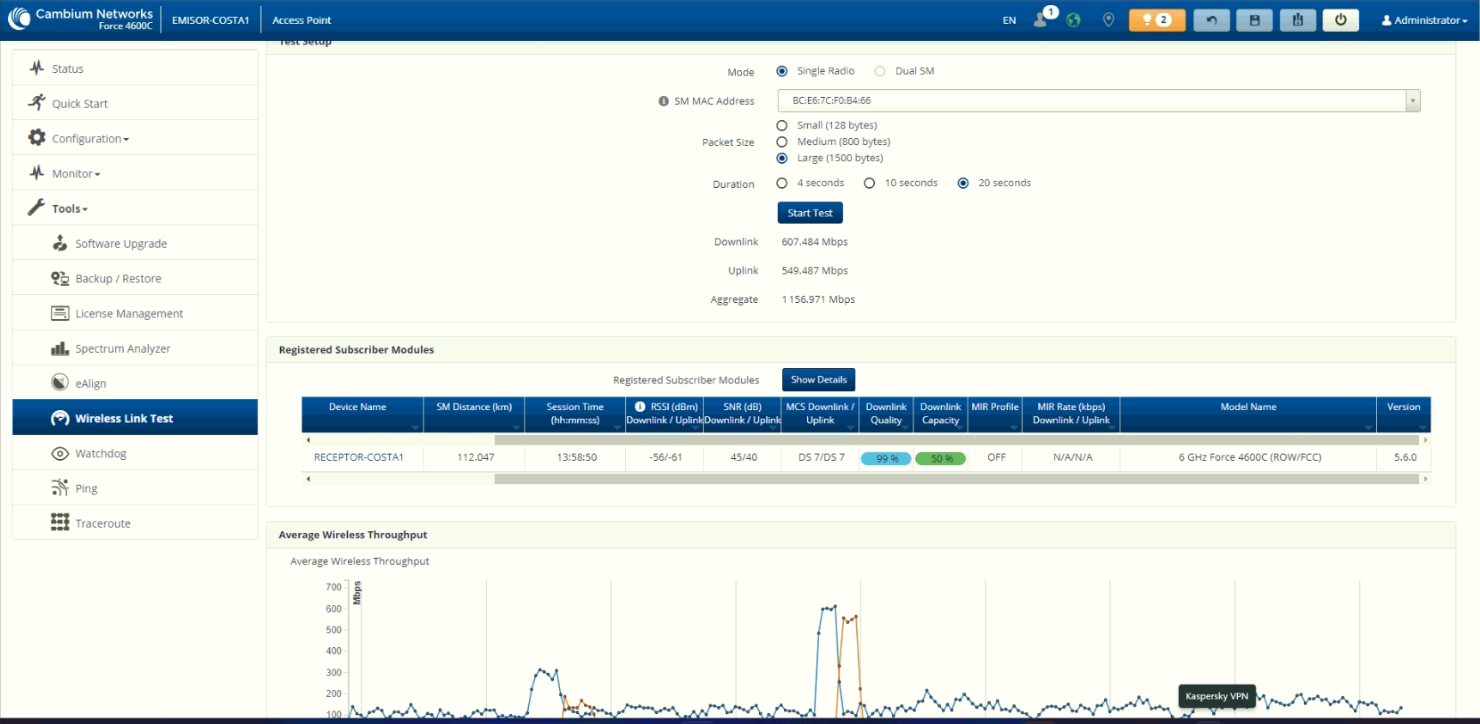
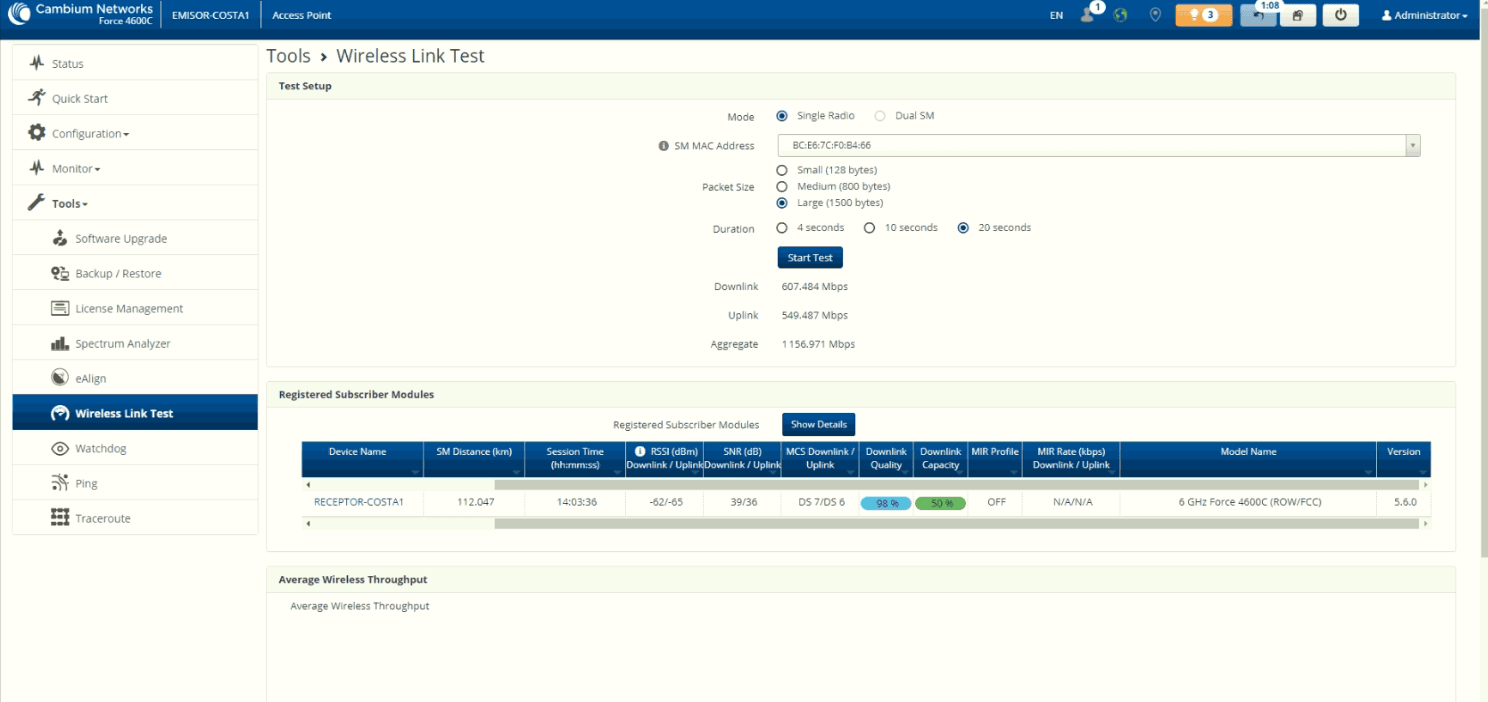
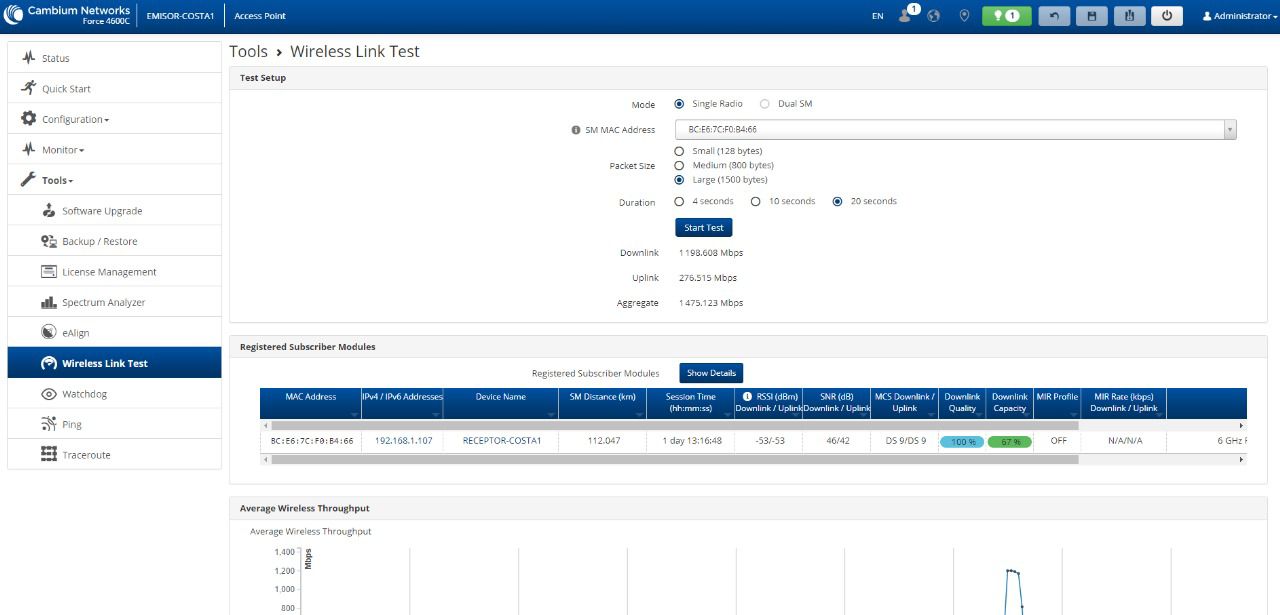
The link achieved an aggregate throughput of 1.15 Gbps (1,156.971 Mbps measured via UDP/TCP test with 1500-byte packets), maintaining rock-solid signal levels and an SNR margin exceeding 35 dB.
1. Operating Parameters & RF Environment
Link Distance: 112.04 km
Center Frequency: 6515 MHz (Extended 6 GHz Band)
Channel Bandwidth: 80 MHz (balanced Primary/Secondary 20/40/80 MHz sub-channels)
Hardware & Spectrum Configuration:
Antennas: NetPoint NPX64 (high gain and narrow beamwidth for side-lobe noise suppression)
Radios: Cambium Networks Force 4600C (Firmware v5.6.0)
SSID: EC1
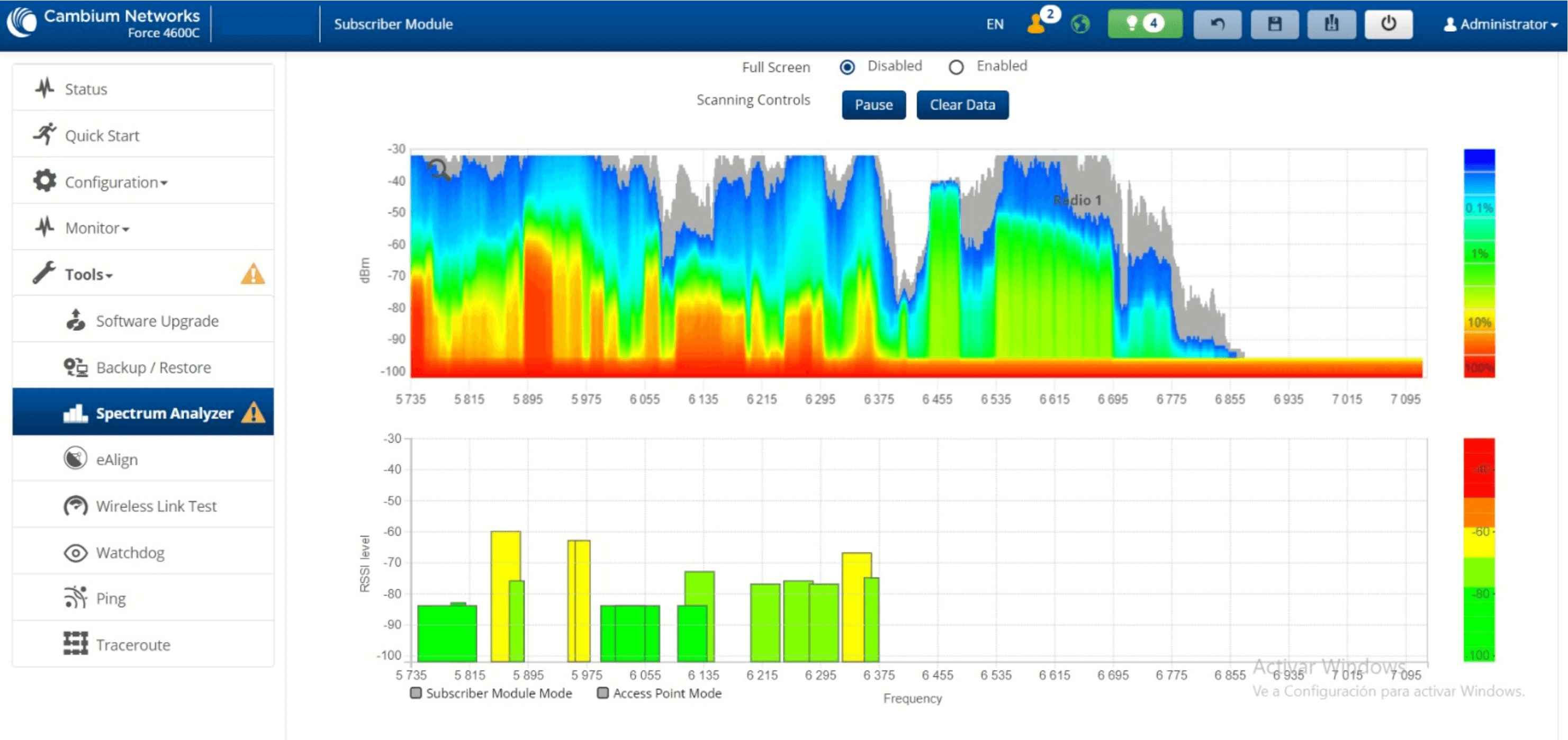
Spectrum Analysis (Spectrum Analyzer)
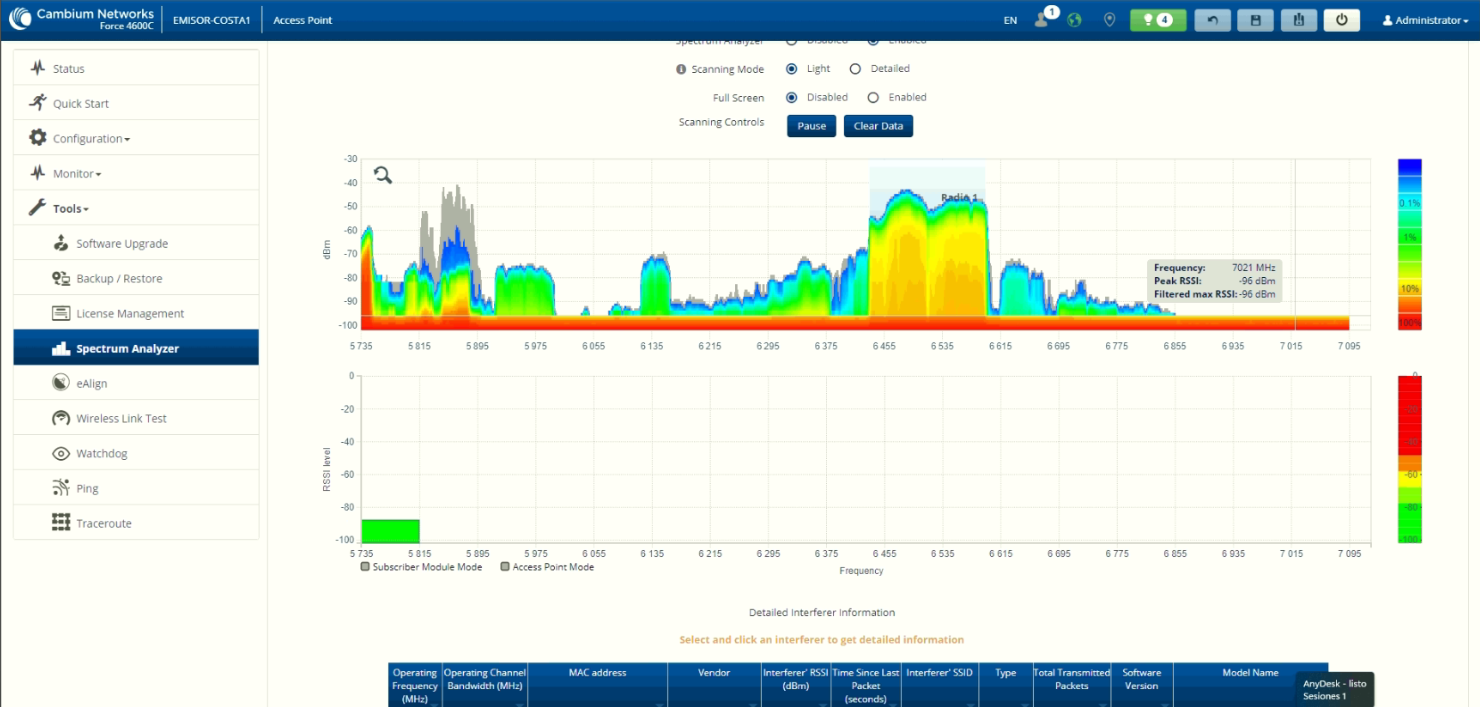
Real-time spectral analysis at the transmitter site revealed an exceptionally clean noise floor across the 6455 MHz – 6615 MHz window, with Peak RSSI values holding steady at -96 dBm. Selecting a center frequency of 6515 MHz avoided co-channel and adjacent interference, unlocking the full potential of the clean 6 GHz band.
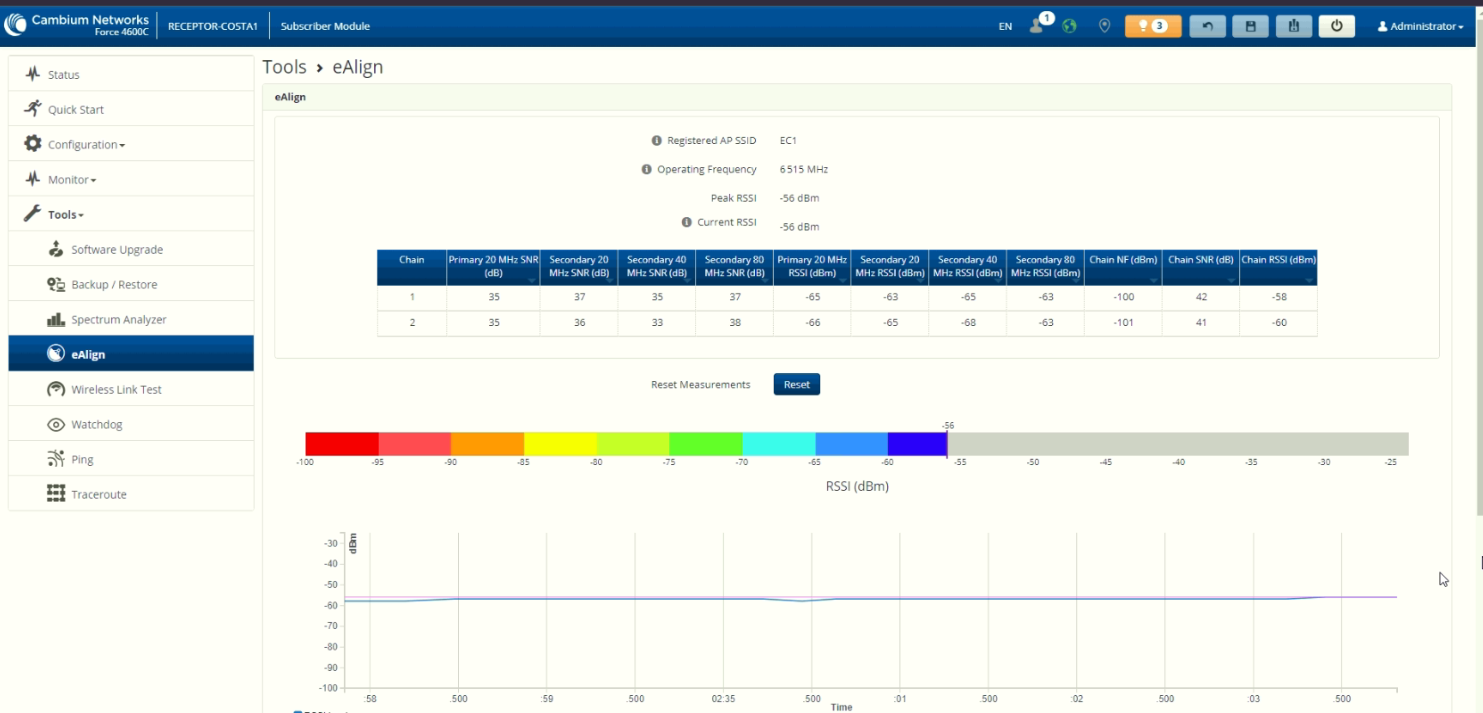
RF Telemetry & Antenna Alignment (eAlign)
Optimal antenna gain and precise alignment of the NetPoint NPX64 units yielded strong RF metrics over the 100+ km path:
Overall RSSI (Downlink / Uplink): -56 dBm / -61 dBm (peaks ranging from -56 dBm to -62 dBm logged in subscriber telemetry)
SNR (Signal-to-Noise Ratio):
Downlink: 45 dB
Uplink: 40 dB
Cross-Polarization & Chain Balance (eAlign):
Chain 1 (V/H): Primary 20MHz SNR: 35 dB | Secondary 80MHz SNR: 37 dB | RSSI: -58 dBm | Noise Floor: -100 dBm
Chain 2 (V/H): Primary 20MHz SNR: 35 dB | Secondary 80MHz SNR: 38 dB | RSSI: -60 dBm | Noise Floor: -101 dBm
Delta between chains: < 2 dB, confirming accurate physical alignment and cross-polarization isolation.
Link Performance & Traffic Capacity (Throughput Test)
Throughput testing was conducted using large packet payloads (1500 bytes):
Traffic MetricMeasured CapacityDownlink Throughput607.484 MbpsUplink Throughput549.487 MbpsAggregate Throughput1,156.971 Mbps (1.15 Gbps)Downlink Link Quality99% / 98%Downlink Link Capacity50% (capped by test profile/configuration)
Modulation Profiles & Error Rates (MCS)
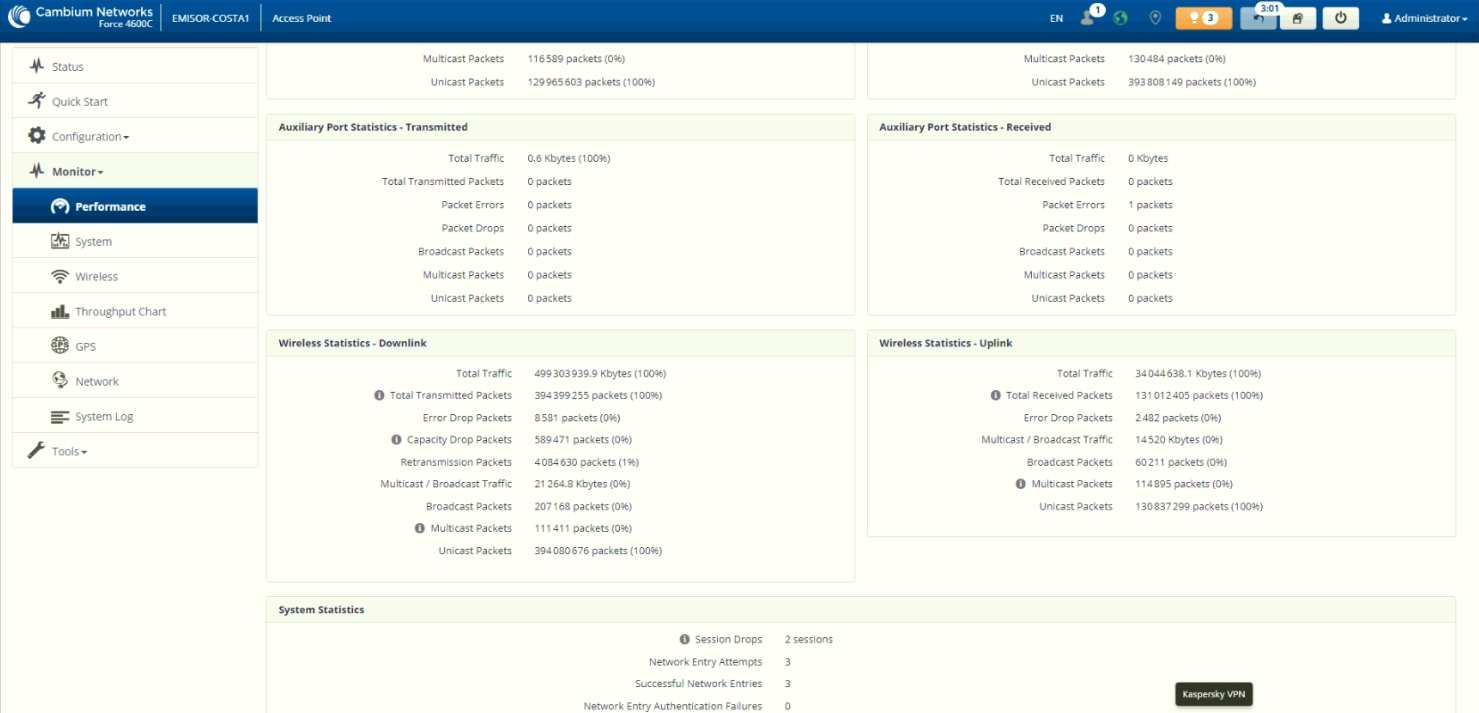
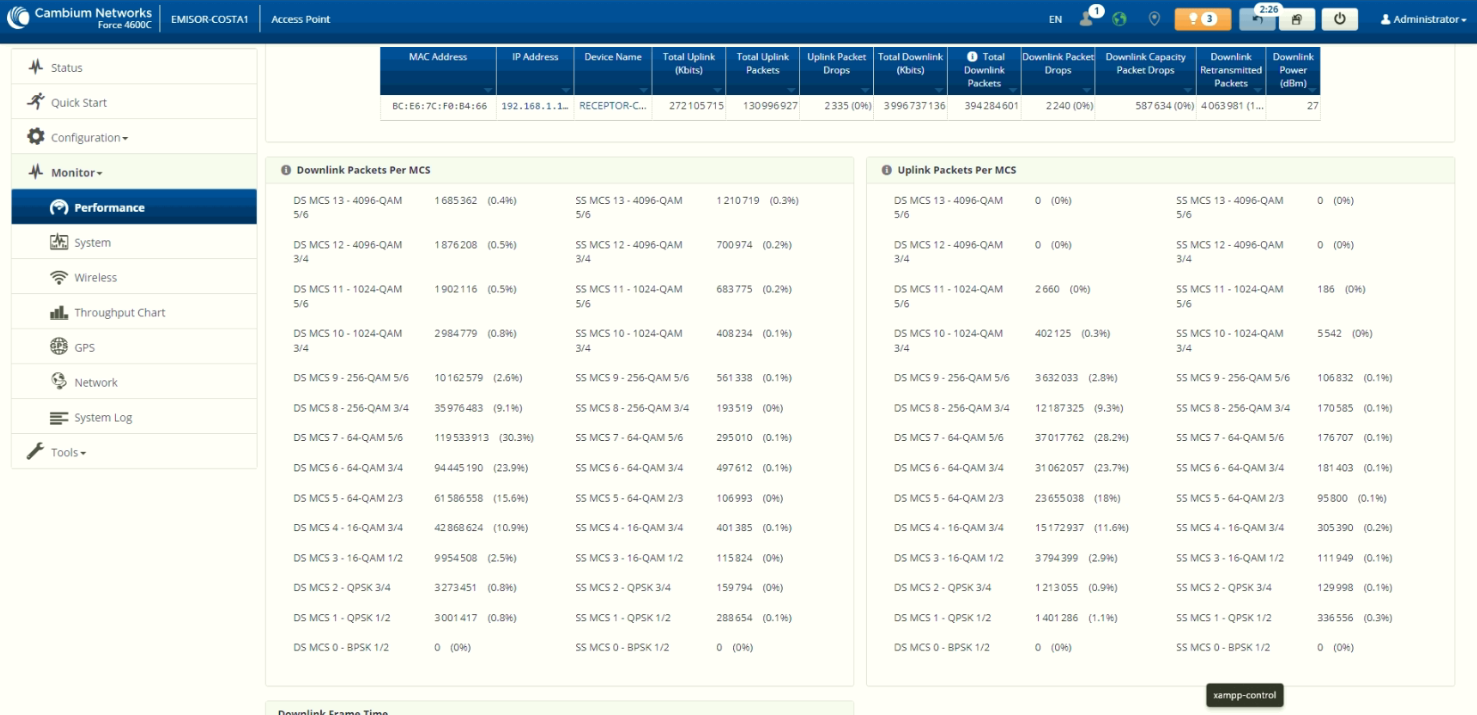
Under live production workloads pushing hundreds of millions of packets, the link operates predominantly at high-order modulations (64-QAM, MCS 6 & 7), scaling into higher schemes (256-QAM / 1024-QAM / 4096-QAM) as traffic demands peak.
Packet Integrity:
Total Transmitted Packets (DL): > 394 Million
Total Received Packets (UL): > 131 Million
Drop / Error Rates: Zero packet drops or errors on the auxiliary interface, with cumulative retransmissions remaining below 1%.
Final Results
Conclusion
Combining NetPoint NPX64 antennas with Cambium Force 4600C radios demonstrates that transporting gigabit capacity over 100 kilometers without fiber optic infrastructure is fully viable. The setup delivers the directional gain, off-axis noise rejection, and phase stability required to sustain dense modulation schemes across extreme path lengths in the 6 GHz band.
Company: WISPConnecting
Onwer: Hector Manuel Arenas